
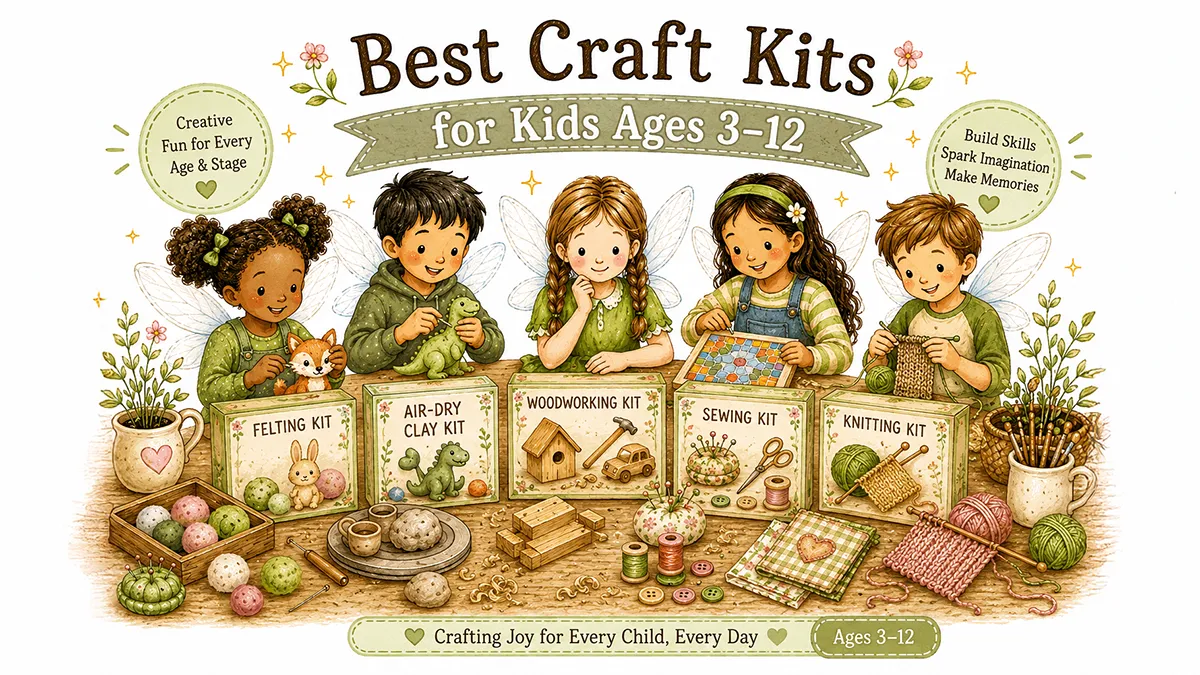
Choose craft ideas by your child’s stage, patience, coordination, and growing independence. These age ranges are flexible, but they can help you choose projects that feel inviting instead of frustrating.
A good craft for a child is not only about the finished project. It should give them a real material to explore, a clear beginning, enough support to feel successful, and enough freedom to make choices along the way.
Quick Comparison by Age
| Age Range | Good Fits | Mess | Adult Help | Best Suited For |
|---|---|---|---|---|
| 3-5 | Paper collage, watercolor, air-dry clay, nature sorting, stickers | Low-medium | High | Short, sensory, supported |
| 6-8 | Beadwork, beginner sewing, knitting, painted wood, ornaments | Low-medium | Medium | Following simple steps, visible goals |
| 9-12 | Embroidery, woodworking, jewelry, detailed clay, real tools | Medium | Low-medium | Skill-building, giftable results |
Want the complete, always-current list for one age? Everything for ages 3-5 | Everything for ages 6-8 | Everything for ages 9-12
Crafts by Age 3-5: Simple, Sensory, and Supported
Preschool-age children usually do best with short projects, big movements, soft materials, and plenty of adult help. At this stage, crafting is often more about touching, sorting, squeezing, painting, tearing, gluing, and noticing than making something perfect.
Good Fits
Paper collage, watercolor painting, air-dry clay, nature sorting, simple garlands, sticker crafts, and decorating pre-cut shapes.
Parent Tip
Prepare the materials before inviting your child in. Offer only a few choices at once so the project feels calm and possible.
Crafts by Age 6-8: More Steps, More Independence
Children in this range are often ready for projects with simple instructions, repeated steps, and a visible goal. They may still need help starting, tying, cutting, or cleaning up, but they can usually take more ownership of the middle of the project.
Good Fits
Paper crafts, beadwork, beginner sewing, clay keepsakes, knitting, painted wood pieces, seasonal ornaments, handmade cards, and nature-inspired projects.
Parent Tip
Break projects into small steps. A child may enjoy doing one part today and finishing the rest later.
Crafts by Age 9-12: Skill-Building and Real Finished Pieces
Older children often want projects that feel more grown-up, useful, decorative, or giftable. They may enjoy learning a technique, following a pattern, improving their work, and finishing something they can display or give away.
Good Fits
Embroidery, stitching kits, knitting, woodworking, detailed clay projects, painting, handmade gifts, jewelry making, and projects with reusable tools.
Parent Tip
Let older kids help choose the project. Ownership matters more at this age, and a little choice can make the difference between resistance and focus.
How to Choose the Right Level
If a project requires sharp tools, careful measuring, hot glue, small beads, or long attention, plan to stay nearby. If a child is tired, hungry, or rushed, choose something simpler. The right craft should stretch a child gently without turning the afternoon into a battle.
For kit ideas organized by age, read our Best Craft Kits for Kids Ages 3-12 guide. For an easy place to begin, try our Screen-Free Craft Ideas for Rainy Days.