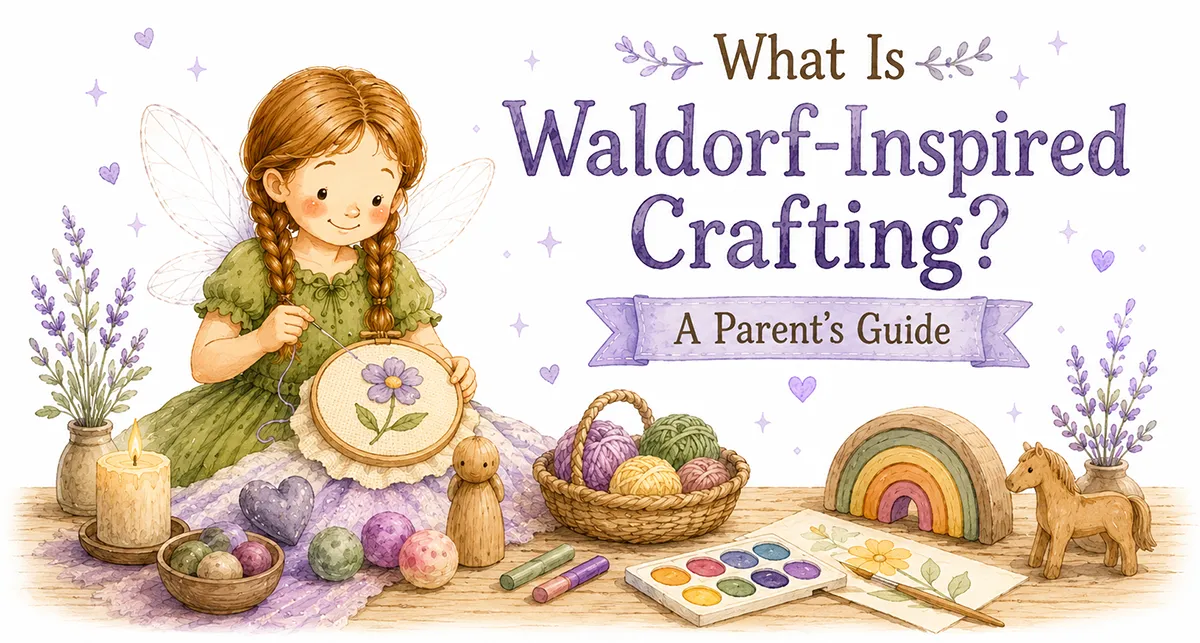
Waldorf-inspired crafting is one of the calmest, most grounded ways to bring hand-work into a kid life. It is not a brand, not a religion, and not a strict method. It is an approach to making things that prioritizes natural materials, gentle pacing, seasonal awareness, and the idea that the work itself matters as much as the outcome.
This guide walks through what Waldorf-inspired crafting actually means, the materials and projects that fit, and how to start at home — with or without a kit. If you want product picks, jump straight to our Best Waldorf-Inspired Craft Kits guide.
What Is Waldorf Education?
Waldorf (also called Steiner) education started in 1919 in Germany, founded by Rudolf Steiner. The full curriculum is broad and philosophical — it covers reading, math, science, language, music, movement, and the arts — and is built around the idea that children develop in distinct stages, and that learning should match the stage.
Most parents are not enrolling their kids in a Waldorf school. But many borrow pieces of the approach for life at home — the seasonal calendar, the natural materials, the focus on hand-work and rhythm, the gentle pace. That is what we mean by Waldorf-inspired: the practical, accessible side of the approach.
The Core Principles of Waldorf Crafting
1. Natural Materials Over Plastic When Possible
Wool, wood, beeswax, cotton, silk, paper, natural dyes. These materials feel different in the hand than plastic. They have warmth, weight, and texture that change as kids work with them. A wool felted ball, a beeswax figure, a wooden bowl — these objects belong in the world. Plastic toys often do not.
2. Slow Process Over Fast Output
Most Waldorf crafts take longer than mainstream kid crafts. Felting a small figure can take hours. Wet-on-wet watercolor is slow. Hand-knitting a dishcloth takes a week. The slowness is the point — it teaches focus, patience, and the satisfaction of finishing something the child made entirely themselves.
3. Simplicity Leaves Room for Imagination
A Waldorf doll has a soft, almost-blank face. The child imagines the rest. The same applies to crafts — a few good materials with no fixed outcome leave more room for the child to bring their own ideas than a step-by-step kit with twenty pieces.
4. Beauty Is Part of the Lesson
Materials are chosen to feel and look lovely. Tools are arranged thoughtfully on a wooden tray. A craft is set out as an invitation, not a dump of supplies. The aesthetic itself teaches kids that the work is worth respect.
5. Seasons Matter
Waldorf families often follow a seasonal rhythm — felted spring flowers, paper lanterns in autumn, beeswax candles in winter. This connects the child to the natural year and gives each craft a reason to exist beyond just keeping busy.
Common Waldorf-Inspired Crafts
Wool Felting
The most iconic Waldorf craft. Wool roving is shaped into small figures, animals, or scenes either with felting needles (ages 7+) or with warm soapy water (gentler, works for younger kids). The end result is sturdy, beautiful, and very holdable.
Beeswax Modeling
Pure beeswax modeling sticks warm in the hands and become pliable. Kids shape small figures, fruits, animals. The smell is wonderful, the material is natural, and the finished pieces hold their shape almost indefinitely.
Wet-on-Wet Watercolor
The Waldorf watercolor method: wet the paper first, then apply paint. Colors bleed and blend in soft, dreamlike washes. Typically only three primary colors are used at a time so kids learn how colors mix and discover purples, greens, and oranges on their own.
Finger Knitting and Hand Sewing
Finger knitting teaches kids the basic over-and-under motion of textile work without needles. Hand sewing on felt is a natural next step — kids make small stuffed animals, pouches, or simple repair work. Both fit kindergarten and early-elementary ages.
Wooden Toy Making
Sanding, painting, or assembling simple wooden figures, vehicles, or structures. The wood itself does most of the aesthetic work. Older kids can move into real woodworking with proper child-sized tools.
Nature Crafts
Pressed flowers, leaf prints, acorn people, twig weaving, stone painting. The materials come from walks and the garden. The craft becomes part of the relationship with the season.
Lantern Making
A Waldorf autumn tradition. Kids make paper lanterns lit by small candles or LED lights, then walk with them at dusk for Martinmas in November. Even outside a Waldorf school, lantern walks are a lovely small family ritual.
Why Waldorf-Inspired Crafts Matter
You do not have to subscribe to all of Steiner philosophy to find these crafts useful. The practical benefits stand on their own:
- Fine motor development. Felting, knitting, sewing, beeswax work — all build small-muscle control.
- Sustained attention. Slow crafts teach kids to stay with a project longer than a TikTok video.
- Sensory grounding. Real materials engage touch and smell in ways screens never can.
- Pride of finished work. A wool figure or a wooden bowl is something the child made entirely. That kind of pride is harder to fake than a sticker on a worksheet.
- Less screen time. Hand-work fills time without needing batteries.
How to Start at Home
You do not need a Waldorf curriculum or expensive kit to start. Try this:
- Pick one craft. Felting or beeswax or watercolor. Just one to start.
- Buy or gather basic supplies. A small bag of wool roving, a watercolor pad, or a set of beeswax sticks. Under $25 in total.
- Set up a small inviting space. A wooden tray, a candle, a folded cloth. Make the work feel important.
- Sit with the child the first few times. Show them the motion, then step back.
- Let them keep going on their own. The pieces they make are theirs, not yours to correct.
Basic Supplies for a Waldorf-Inspired Craft Shelf
- Wool roving in 4-6 colors
- Felting needles or wet-felting supplies (soap, warm water, towel)
- Beeswax modeling sticks
- Watercolor paper and a simple primary-color watercolor set
- Real watercolor brushes (a few sizes)
- Chunky natural-fiber yarn
- Unfinished wood pieces and sandpaper
- Natural objects gathered on walks: leaves, acorns, stones, twigs
For specific product picks: Best Waldorf-Inspired Craft Kits.
Common Concerns
“My kid is too young for sharp needles.”
Use safety needles until you feel you child is ready. Or pick crafts with no sharp tools at all — beeswax modeling, finger knitting, watercolor.
“This sounds expensive.”
It can be, but does not have to be. A small bag of wool roving and a watercolor pad together cost less than a single plastic toy. You build slowly. Most of the materials last a long time.
“My kid wants quick results, not slow craft.”
Start with the fastest finishing Waldorf crafts: wet felting a single ball, a single beeswax animal, one small watercolor painting. Build up to longer projects when the child shows readiness.
“Do I have to follow the whole Waldorf approach?”
No. Take what fits your family. The natural materials and slow pacing stand on their own without buying into the full philosophy.
Keep Going
- Best Waldorf-Inspired Craft Kits — product picks
- The Screen-Free Craft Starter List — supplies, projects, age guide
- Parent Guide — why screen-free making matters
- Crafts by Age — what fits each stage
Get the free Fairy Marketplace Craft Book
14 beautiful one-page craft tutorials, from nature weaving to cardboard box towns. Plus our favorite new craft ideas and free printables a few times a season.
No spam, ever. Unsubscribe any time.
Check your inbox! Your craft book is on the way. (Give it a few minutes, and peek in the spam folder just in case.)